Community Overview

Exploring Our Community

Billings is Montana's largest city and the commercial center of eastern Montana and northern Wyoming. The city sits along the Yellowstone River, framed on the north and east by the Rimrocks, sandstone cliffs that rise 300 to 500 feet above the valley. You get the services of a regional hub, short commutes, and trailheads inside city limits.

Community Snapshot

Item Detail
City Population 121,239 (2025 estimate)
Metro Population 193,603 (2025 estimate)
Elevation About 3,650 feet
Climate Semi-arid, four seasons, about 14 inches of annual precipitation
Airport Billings Logan International (BIL), in the city
Interstates I-90 and I-94
State Sales Tax None

Regional Setting

  • Montana's largest city and the largest metro area within a 450-mile radius
  • Trade area of about 125,000 square miles across Montana, Wyoming, and the Dakotas
  • Yellowstone River running along the south side of the city
  • Views of the Beartooth, Pryor, Bighorn, Crazy, and Bull mountain ranges from the Rimrocks
  • Gateway to Red Lodge, the Beartooth Highway, and Yellowstone National Park

Climate

Billings has four distinct seasons with low humidity. Summers are warm and dry. Winter brings regular snow, but frequent thaws keep it from building up for long.

Measure Average
Annual Temperature 48°F
January Temperature 27°F
July Temperature 73°F
Typical July High 86°F to 90°F
Typical January Low About 20°F
Annual Precipitation 13.7 inches
Annual Snowfall About 57 inches

Air Travel

Billings Logan International Airport sits on the Rimrocks above downtown, a short drive from most neighborhoods. Nonstop service reaches major hubs across the country.

  • Denver
  • Salt Lake City
  • Minneapolis-St. Paul
  • Seattle
  • Chicago O'Hare
  • Dallas-Fort Worth
  • Phoenix (seasonal)

Travel Distances

Destination Approximate Drive
Pompeys Pillar National Monument 28 miles
Red Lodge and Red Lodge Mountain 1 hour
Little Bighorn Battlefield 1 hour
Bozeman 140 miles, about 2 hours
Miles City 2 hours
Butte 3 hours
Yellowstone National Park, Northeast Entrance About 3.5 hours via the Beartooth Highway

Regional Economy

  • Healthcare: Billings is the medical center for a multistate region, with two major hospital systems.
  • Energy: Three oil refineries operate in the Billings area, making it the refining center of the northern Rockies.
  • Agriculture: Grain and livestock trade drive regional commerce.
  • Trade and transportation: Interstates, rail, and air cargo support wholesale and retail trade for the region.
  • Education: Montana State University Billings and Rocky Mountain College anchor higher education.
Your Ultimate Travel Guide

Looking to explore a new destination, but not sure where to start? A travel guide can help you discover the hidden gems and must-see attractions of a new place. Whether you're looking for the best local cuisine, the most scenic views, or the most exciting activities, a good travel guide can provide you with insider knowledge and expert recommendations. With a travel guide in hand, you can make the most of your trip and experience a new place like a local. So why not start planning your next adventure with a travel guide today?

History Unveiled: A Journey Through Time

Billings grew from a rail line laid across the Yellowstone Valley. The Northern Pacific Railway founded the town in 1882 as a western railhead and named it for Frederick H. Billings, the railway's former president. Within months, the town grew from three buildings to more than 2,000 residents. That growth earned Billings its lasting nickname, the Magic City.

Long before the railroad, the valley was home to Indigenous peoples, and it was a stop on the Lewis and Clark Expedition. Through the 20th century, oil, natural gas, and coal discoveries made Billings an energy center. After World War II, the city became the region's financial, medical, and cultural hub.

Key Milestones

Year Event
1806 William Clark carves his name on Pompeys Pillar, 28 miles northeast of present-day Billings
1882 Northern Pacific Railway founds Billings; the nearby town of Coulson fades
1898 St. Vincent Hospital opens as Billings' first hospital
1903 Moss Mansion is completed
1909 Billings Depot opens
1927 Eastern Montana Normal School opens, later Montana State University Billings
1960s Billings passes Great Falls as Montana's largest city
1985 First Interstate Center is completed as Montana's tallest building
1992 Billings receives the All-America City Award

Notable Figures

  • Frederick H. Billings: Northern Pacific president and the city's namesake
  • William Clark: Co-leader of the Lewis and Clark Expedition, whose 1806 signature remains at Pompeys Pillar

Historic Sites

  • Pompeys Pillar National Monument: Home to the only remaining physical evidence of the Lewis and Clark Expedition on its route
  • Pictograph Cave State Park: One of Montana's most significant archaeological sites, a few miles southeast of the city
  • Moss Mansion Historic House Museum: A 1903 home preserved with original furnishings
  • Western Heritage Center: Regional history museum housed in the 1901 Parmly Billings Library
  • Billings Depot: The restored 1909 rail depot downtown
  • Boothill Cemetery: The last physical trace of Coulson, the settlement that preceded Billings
  • Little Bighorn Battlefield National Monument: About an hour southeast
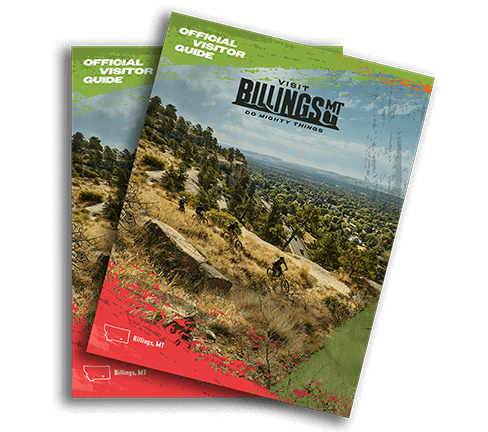
Population & Demographics: Understanding Our Diverse Community

Billings has grown steadily for more than a century. The metro area has grown faster than the nation since 2010, while keeping the scale and pace of a mid-sized city. Residents are well educated, and unemployment is low.

Population Snapshot

Measure Billings
City Population (2025 estimate) 121,239
Metro Population (2025 estimate) 193,603
Median Age 38.1
Median Household Income $71,855
Bachelor's Degree or Higher 37.0%
High School Diploma or Higher 95.5%
Unemployment Rate 3.5%

Population Growth

Year City Metro
2000 91,740 147,099
2010 104,294 167,167
2020 117,147 184,162
2025 121,239 193,603

From 2010 to 2024, the Billings metro grew 14.9%, compared with 9.9% for the U.S. population overall.

Major Employment Sectors

  • Healthcare and social services
  • Wholesale and retail trade
  • Manufacturing and oil refining
  • Agriculture and livestock
  • Transportation and distribution
  • Education

© Copyright 2023 Pacific Companies. All Rights Reserved.