Bemidji sits in north-central Minnesota, on the shores of Lake Bemidji, at the headwaters region of the Mississippi River. It is the largest city and regional hub for a wide rural area, drawing residents from across Beltrami County and beyond for shopping, healthcare, education, and culture. The setting is defined by water and forest, with roughly 300 lakes within a 20-mile radius and easy access to the surrounding North Woods.
Population: about 15,600 in the city, with a regional service area well over 100,000
Regional setting: North-central Minnesota lake country
Nearest major hub: Bemidji Regional Airport, with connections to Minneapolis-St. Paul
Drive to Minneapolis: about 3.5 to 4 hours south
Climate: Four distinct seasons, cold snowy winters, warm summers
Regional drivers: Sanford Health, Bemidji State University, tourism, education
Bemidji is known as the "First City on the Mississippi" and claims to be the birthplace of the Paul Bunyan legend, marked by the well-known Paul Bunyan and Babe the Blue Ox statues on the lakefront. The city blends a college-town feel from Bemidji State University with the outdoor culture of Minnesota lake country and a role as the economic anchor for the region.
| Season | What to expect |
|---|---|
| Summer | Warm days, average highs in the upper 70s, prime lake season |
| Fall | Crisp air and strong color, comfortable temperatures |
| Winter | Cold and snowy, about 45 inches of snow per year, active winter recreation |
| Spring | Cool and variable as the lakes thaw |
Average annual precipitation is about 25 inches. Winters are a real part of life here, and the community leans into them with skiing, snowmobiling, ice fishing, and curling.
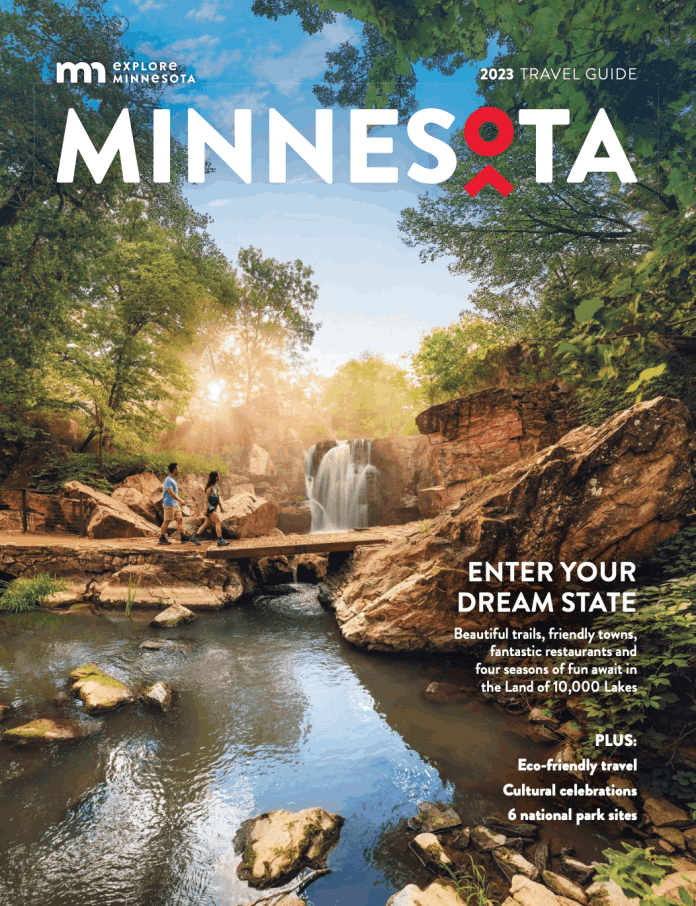
Looking to explore a new destination, but not sure where to start? A travel guide can help you discover the hidden gems and must-see attractions of a new place. Whether you're looking for the best local cuisine, the most scenic views, or the most exciting activities, a good travel guide can provide you with insider knowledge and expert recommendations. With a travel guide in hand, you can make the most of your trip and experience a new place like a local. So why not start planning your next adventure with a travel guide today?
Bemidji grew up around its lake and the timber trade of the late 1800s. The area was long home to the Ojibwe people, and the city takes its name from a Native leader whose name referred to the way the Mississippi River cuts across the lake. The modern city was established in 1888 and incorporated soon after, developing quickly as logging opened up the North Woods.
In its early decades, Bemidji was a rough lumber town, moving pine out of the surrounding forests. As the old-growth timber thinned, the local economy shifted toward agriculture, tourism, education, and healthcare. The founding of a state normal school in 1919, which became Bemidji State University, anchored the city as an education center and helped it outlast the boom-and-bust cycle of logging.
The Paul Bunyan and Babe the Blue Ox statues, built in 1937, tie the city's identity to its logging past and remain among the most recognized roadside landmarks in the country. The three nearby Ojibwe reservations, Red Lake, Leech Lake, and White Earth, give the region a deep and living Native heritage that shapes local culture, art, and community life.
Bemidji is a young, growing regional center. The city itself holds about 15,600 people, but it serves as the hub for a much larger area, with a regional service population well over 100,000 drawing on its healthcare, retail, and education. Bemidji State University gives the city a notably young age profile and a steady flow of students, faculty, and staff.
| Metric | Value |
|---|---|
| City population | About 15,600 |
| Regional service area | Over 100,000 |
| Median age | About 30 |
| Median household income | About $53,850 |
| Largest age group | 20 to 24 years |
The presence of the university pulls the median age down to around 30, well below the national figure. The population skews toward young adults and families, with the 20 to 24 age group the single largest cohort. This creates demand for pediatric, family, and adult specialty care as young families put down roots in the area.
Bemidji is more diverse than much of rural Minnesota, shaped by its proximity to three Ojibwe reservations.
The strong Native American presence, tied to the Red Lake, Leech Lake, and White Earth nations nearby, is a defining feature of the community and its health care needs.
The regional economy runs on a few anchor sectors.