Community Overview

Exploring Our Community

Montana's Basecamp: Where the Great Plains Meet the Rocky Mountains

Flying into Great Falls, you see the northern Great Plains’ wheat fields give way to the Rocky Mountain Front, with the Missouri River winding through the city, its waterfalls harnessed by five hydroelectric dams—earning the nickname “The Electric City.” Central Montana’s wide-open spaces meet mountain majesty just 100 miles south of the Canadian border.

Great Falls is perfectly positioned between Glacier National Park (180 miles north) and Yellowstone (264 miles south), with the Bob Marshall Wilderness just 45 minutes west. Outdoor recreation—fishing, hiking, and wildlife viewing—is minutes from your door.

The city spans 22.9 square miles along the Missouri River, with a metropolitan population of 84,414 in Cascade County. Montana’s third-largest city, Great Falls serves as the region’s cultural, commercial, and financial hub, anchored by Malmstrom Air Force Base and the Montana Air National Guard’s 120th Airlift Wing at the airport.

  • Population of 60,442 within city limits, with metropolitan area of 84,414 residents
  • Located at 3,337 feet elevation on the northern Great Plains
  • 180 miles from Glacier National Park's eastern entrance
  • 264 miles from Yellowstone National Park
  • Great Falls International Airport with direct flights to Denver, Salt Lake City, Seattle, Minneapolis, Chicago, and Las Vegas
  • Malmstrom Air Force Base and Montana Air National Guard provide economic stability
  • Five historic waterfalls on the Missouri River, three now sites of hydroelectric dams
  • Year-round access to outdoor recreation, from hiking and fishing to skiing and snowmobiling

Climate and Seasons: Big Sky Country Weather

Great Falls experiences true four-season living with the dramatic weather changes that define Big Sky Country. Summers are warm and pleasant, with July temperatures averaging 83°F during the day and cooling to comfortable 56°F evenings. You enjoy about 188 sunny days per year, with long summer days stretching to nearly 16 hours of daylight in June.

Winters bring real cold and snow, averaging 58 inches annually compared to the national average of 28 inches. December and January see daytime highs around 30°F and nighttime lows near 18°F. The wind that occasionally sweeps across the plains contributes to dramatic skies and the spectacular Montana sunsets the region is known for.

  • 188 sunny days annually
  • Summer temperatures ranging from 56°F to 83°F (July)
  • Winter temperatures ranging from 18°F to 32°F (December–January)
  • 58 inches of annual snowfall
  • 14 inches of annual precipitation
  • Low humidity year-round
  • Peak sunshine hours of 12 per day in July
  • Semi-arid climate with four distinct seasons

A Legacy Rooted in Lewis and Clark

The Lewis and Clark Expedition spent 31 arduous days here in June 1805, portaging their boats and supplies around the 10-mile stretch of waterfalls that would eventually give the city its name. The explorers called this section of the Missouri River "the great falls", noting cascades with drops of up to 96 feet.

Great Falls was officially founded in 1883 as a planned railroad hub. The completion of the Black Eagle Dam in 1890—the first hydroelectric dam in Montana—attracted industry and accelerated growth. During World War II, more than 7,500 aircraft passed through Gore Field on their way to Europe and the Pacific, cementing the city’s strategic importance.

  • 31 days spent by the Lewis and Clark Expedition portaging around the falls in 1805
  • City founded in 1883 as a planned railroad hub
  • First hydroelectric dam in Montana built here in 1890
  • Largest city in Montana from 1950 to 1970
  • Critical role in World War II aviation logistics
  • Home to Charles M. Russell, the famous Western artist
  • Historic downtown buildings dating to the late 1800s
  • Legacy as “The Electric City” continues with renewable energy focus

Western Art Capital of the World

Great Falls earned its reputation as the "Western Art Capital of the World" through its association with Charles Marion Russell. Russell lived and worked in Great Falls from 1897 to 1926, creating iconic works that captured the spirit of the American West. The C.M. Russell Museum houses the world’s largest collection of his art.

The Paris Gibson Square Museum of Art, housed in a renovated 1896 Romanesque Revival building, showcases contemporary art while preserving architectural history. Together, these institutions anchor a cultural scene that surprises newcomers and defines the city’s identity.

  • C.M. Russell Museum with world’s largest collection of Russell's artwork
  • Paris Gibson Square Museum of Art in historic 1896 school building
  • Annual Western Art Week in March with exhibitions and auctions
  • Active local arts community with galleries and studios
  • Lewis and Clark National Historic Trail Interpretive Center
  • Cultural events celebrating Western heritage and contemporary creativity
  • Growing reputation as destination for art collectors
  • Surprising arts scene for a city of this size

Access and Connectivity

Great Falls International Airport sits just 3 miles southwest of downtown, offering direct flights to major hubs that make national travel convenient. You reach Seattle in under 2 hours and Denver in about 90 minutes, making conferences and long weekends entirely practical.

Interstate 15 runs north-south through the city, connecting Great Falls to Helena and the Canadian border. Glacier National Park is about 2.5 hours away, while Calgary, Alberta—320 miles north—offers international airport access and a change of pace.

  • Great Falls International Airport 3 miles from downtown
  • Direct flights to Denver, Salt Lake City, Seattle, Minneapolis, Chicago, Las Vegas
  • 2-hour flight to Seattle, 90 minutes to Denver
  • Interstate 15 provides north-south highway access
  • 180 miles (2.5 hours) to Glacier National Park
  • 90 miles to Helena, Montana's capital
  • 320 miles to Calgary, Alberta for international airport access
  • Well-maintained roads with scenic drives in every direction

Great Falls represents an increasingly rare combination in American healthcare: a genuine community where physicians make a difference, surrounded by landscape and recreation that metropolitan areas cannot match, yet close enough to major airports and cities that you never feel isolated. This is where physicians come not just to practice medicine, but to live the kind of life that reminded them why they chose healthcare in the first place.

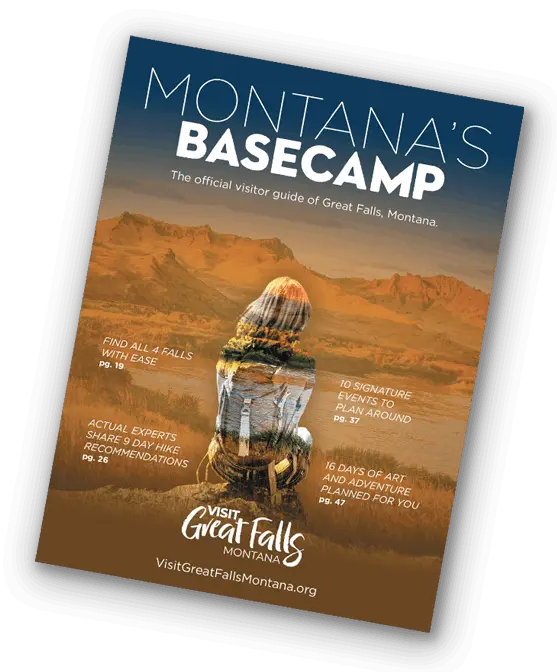
Your Ultimate Travel Guide

Looking to explore a new destination, but not sure where to start? A travel guide can help you discover the hidden gems and must-see attractions of a new place. Whether you're looking for the best local cuisine, the most scenic views, or the most exciting activities, a good travel guide can provide you with insider knowledge and expert recommendations. With a travel guide in hand, you can make the most of your trip and experience a new place like a local. So why not start planning your next adventure with a travel guide today?

History Unveiled: A Journey Through Time

The Vision of Paris Gibson: A Planned City on the Northern Plains

Founding and Early Development

Unlike many Montana towns built around mining or railroads, Great Falls was a planned city. Paris Gibson, inspired by Lewis and Clark’s journals, envisioned a city harnessing the Missouri River’s waterfalls for industry. He partnered with railroad magnate James J. Hill, who provided financial backing.

  • Founded by Paris Gibson in 1884; town site filed Sept. 1884
  • 200 settlers by year’s end
  • Streets laid out in a precise grid for function and beauty
  • Nearly 1,000 acres reserved for parks
  • Strategic location chosen for water power and transportation
  • First permanent buildings by 1890; city incorporated 1888

The Electric City

Hydroelectric power transformed Great Falls into an industrial hub. The Black Eagle Dam (1890) supplied cheap, abundant electricity, attracting copper smelters, flour mills, meatpacking plants, and breweries.

  • Black Eagle Dam completed 1890; first hydroelectric facility in Montana
  • Copper smelter employed over 1,000 workers by 1892
  • “The Electric City” nickname reflected technological leadership
  • Royal Milling Company founded 1892; later merged into General Mills
  • Montana Flour Mills opened 1916 (4,500 bushels/day capacity)
  • Industrial growth made Great Falls Montana’s fastest-growing city

Agriculture and Economic Resilience

The Panic of 1893 highlighted the need for economic diversification. The city invested in agriculture, irrigation, and rail connectivity, building a more stable economy.

  • North Montana Agricultural Society formed to support farming
  • Wheat production boomed 1906–1907; 11 railroad spur lines by 1920
  • Population reached 30,000 by 1913
  • Served as Montana’s largest city mid-20th century
  • Became a regional center for banking, healthcare, and retail

World War II Contributions

During WWII, Great Falls became a critical military hub. The city hosted the Army Air Base (now Malmstrom AFB) and served as the starting point for the Alaska-Siberia Lend-Lease route, sending aircraft to the Soviet Union.

  • Army Air Base built in six months starting May 1942
  • B-17 bomber crews trained for European deployment
  • 8,000+ aircraft passed through Gore Field 1942–1945
  • Women Airforce Service Pilots (WASPs) ferried planes to Great Falls
  • Over 1.7 million pounds of cargo shipped to the USSR
  • Soviet pilots stationed in Great Falls

Post-War Growth and Military Presence

The wartime military presence became permanent, anchoring the local economy even as industrial jobs declined.

  • Great Falls AFB became Malmstrom AFB in 1955, named after Colonel Einar Malmstrom
  • Home to Minuteman missile installations during the Cold War
  • Montana Air National Guard’s 120th Airlift Wing established
  • Copper smelter closed in the 1980s; railroad jobs declined
  • Great Falls evolved as a regional center for healthcare, education, and services
  • Malmstrom AFB remains the largest employer

Cultural Legacy

Great Falls is also a center of Western art thanks to Charles M. Russell, whose works capture Montana’s landscapes, Native cultures, and cowboy life.

  • Charles M. Russell lived in Great Falls 1897–1926
  • C.M. Russell Museum opened 1953; world’s largest collection of his art
  • Annual Western Art Week draws collectors globally
  • Paris Gibson Square Museum of Art continues local arts tradition

Modern Great Falls

Today, Great Falls blends history, culture, and modern amenities. The city maintains its original street grid, hydroelectric power, and historic downtown, while embracing new institutions and recreational opportunities.

  • Touro College of Osteopathic Medicine opened 2023 (Montana’s first medical school)
  • Lewis and Clark National Historic Trail Interpretive Center preserves expedition history
  • River’s Edge Trail: 25 miles along the Missouri River
  • Historic downtown buildings from late 1800s–early 1900s
  • Five hydroelectric dams continue producing renewable energy
  • Great Falls Symphony founded 1959
  • Population: 60,442 (Montana’s third-largest city)

Population & Demographics: Understanding Our Diverse Community

A Welcoming Community of 84,000

The Great Falls Metropolitan Area (Cascade County) has 84,414 residents, with the city itself home to 60,412—Montana’s third-largest city and a regional hub for north-central Montana. The population is stable, with modest growth and a median household income of $63,934, up nearly 10% from 2022.

The community offers cultural amenities and professional networks while remaining small enough for physicians to be known personally. Patients come from Great Falls and surrounding towns and ranches, creating a diverse, meaningful practice.

Demographics include a nearly even gender split (49.6% male, 50.4% female), median age of 39.3 years, 17.5% under 15, 20% over 65, and 28.6% of households with children under 18.

Community Snapshot

  • MSA population: 84,414; city: 60,412
  • Median household income: $63,934 (+9.7% YoY)
  • Median age: 39.3 years
  • Gender: 49.6% male / 50.4% female
  • 28.6% of households with children under 18
  • 56.9% family households; 43.1% non-family
  • Mean commute: 14.7 minutes

Community Character and Values

Great Falls combines military influence, agricultural heritage, and regional leadership to create a strong community identity. The population is 82.9% White and 3.9% Native American, with the Little Shell Tribe headquartered locally and 30 Hutterite communities nearby, adding cultural diversity.

Malmstrom Air Force Base brings residents from across the country, with 12.9% veterans, fostering a culture of service and adaptability. Residents are friendly, practical, and welcoming, with a manageable pace of life and strong neighborhood connections—physicians quickly become recognized and integrated into the community.

Community Highlights

  • 82.9% White (Non-Hispanic), 3.9% Native American
  • 12.9% military veterans
  • Little Shell Tribe headquarters in Great Falls
  • 30 Hutterite communities nearby
  • Rich traditions in outdoor recreation and Western heritage
  • Friendly, newcomer-welcoming culture
  • Low crime rates, safe for families
  • Active volunteerism and civic engagement

Education and Professional Attainment

Great Falls places a high value on education, with 94.2% of adults completing high school and 28.3% holding a bachelor’s degree or higher. This supports an informed patient population and opportunities for physician spouses. The city hosts three higher education institutions—Great Falls College Montana State University, University of Providence, and Touro College of Osteopathic Medicine—adding academic and professional connections.

Residents often pursue skilled trades, healthcare, education, and technical careers, fostering a practical, results-focused community that values expertise and functional outcomes.

Education Highlights

  • 94.2% adults with high school diploma or higher
  • 28.3% with bachelor’s degree or higher
  • Great Falls College MSU, University of Providence, Touro College of Osteopathic Medicine
  • Strong technical and vocational education programs
  • McLaughlin Research Institute for neurogenetic research
  • Great Falls Public Schools with multiple elementary, middle, and high schools
  • University of Providence provides Catholic liberal arts education

Major Employers and Economic Foundation

Great Falls has a diversified economy providing stability across sectors. Malmstrom Air Force Base is the largest employer, while healthcare employs 5,287 people, led by Benefis Health System and Great Falls Clinic. Retail (3,798) and education (2,830) are also significant, with national employers like Blue Cross Blue Shield, Cargill, Centene, and D.A. Davidson offering career opportunities for physician spouses. Architecture, engineering, and construction firms add professional diversity.

The median per capita income is $35,968, supporting comfortable middle-class living, while about 14% of residents live below the poverty line, ensuring a mix of patients. Unemployment remains low, and the economy has proven resilient over time.

Economic Highlights

  • Malmstrom Air Force Base: largest employer
  • Healthcare: 5,287 employees
  • Retail: 3,798; Education: 2,830
  • Major employers: Benefis, Great Falls Clinic, Great Falls Public Schools
  • National brands: Blue Cross Blue Shield, Cargill, Centene, D.A. Davidson
  • Strong architecture, engineering, and construction sectors
  • Low unemployment
  • Median per capita income: $35,968

Professional Opportunities for Physician Spouses

The presence of national companies, healthcare organizations, educational institutions, and the military base creates genuine career opportunities for physician spouses across multiple fields. Great Falls isn't a one-industry town where relocating spouses struggle to find professional work. Healthcare administration, education, engineering, finance, insurance, and technical fields all offer positions appropriate for professional credentials.

The smaller market size can actually work to your advantage. Rather than competing against hundreds of qualified candidates for every position, physician spouses often find that their credentials make them highly desirable hires. The community values education and expertise, and employers appreciate professionals who choose Great Falls deliberately rather than ending up here by default. Remote work opportunities have expanded dramatically, allowing spouses to maintain careers with companies based anywhere while enjoying Great Falls' quality of life.

  • Healthcare organizations offer administrative and clinical positions
  • Educational institutions hire teachers, professors, administrators
  • Financial services companies including D.A. Davidson
  • Engineering and technical firms seek qualified professionals
  • Remote work increasingly viable across all sectors
  • Smaller candidate pools mean credentials stand out
  • Military base creates demand for various professional services
  • Growing economy provides entrepreneurial opportunities

Cultural Diversity Within a Small City Context

Great Falls maintains more cultural diversity than outsiders might expect from a Montana city of 60,000. The military presence brings residents from across the United States and occasionally from other countries. The Native American population connects the community to indigenous heritage and ongoing cultural traditions. The Hutterite communities maintain distinct cultural and religious practices while contributing to the agricultural economy. The annual Little Shell Chippewa Powwow in nearby Ulm draws participants from across the region.

While Great Falls isn't as ethnically diverse as major metropolitan areas (only 1.7% of residents are foreign-born compared to the national average of 13.8%), the community demonstrates openness to newcomers and different perspectives. The city has successfully integrated waves of newcomers over the decades, from the railroad workers of the 1880s to the military families of today. Physicians relocating from more diverse urban areas should understand that Great Falls offers a different cultural environment, but one marked by genuine friendliness rather than insularity.

  • Military presence brings residents from across United States
  • Native American heritage maintained through tribal connections
  • 30 Hutterite communities contribute to regional character
  • Annual powwows and cultural celebrations
  • International festivals and cultural events throughout year
  • Community values welcoming atmosphere for newcomers
  • Growing Hispanic population (4.9% of total)
  • Great Falls Symphony and arts organizations create cultural connection

Quality of Life Indicators

The statistics tell only part of the story. The 14.7-minute average commute time translates to mornings without stress, evenings that start when you leave work rather than an hour later. The low cost of housing relative to income means that financial pressure doesn't dominate every decision. The 26,010 households include a healthy mix of homeowners and renters, young professionals and established families, creating neighborhood diversity without economic segregation.

The veteran population of 5,967 creates a culture that values service and understands sacrifice. These aren't just statistics; they're your neighbors who understand what it means to serve a larger purpose. The 56.9% of households consisting of families means that parks, schools, and family-oriented amenities remain community priorities. The virtually nonexistent language barriers (99.5% of households speak English as the primary language) simplify medical practice compared to urban settings requiring multiple interpreters.

Great Falls offers what many physicians discover they value most: a place where you can focus on practicing medicine, raising a family, and enjoying life without the complications that metropolitan areas impose. The demographics reflect a community that knows who it is, values stability and quality of life, and welcomes physicians ready to become genuine members of the community rather than distant specialists passing through.

  • 14.7-minute average commute time allows work-life balance
  • Safe neighborhoods throughout city
  • Active community involvement and volunteerism
  • Strong youth sports and activities programs
  • Abundant recreational opportunities for all ages
  • Genuine sense of community and belonging
  • Lower stress lifestyle compared to metropolitan areas
  • Community that values and supports healthcare professionals
© Copyright 2023 Pacific Companies. All Rights Reserved.