History Unveiled: A Journey Through Time
French Colonial Origins (1718-1762)
Your story in New Orleans begins where the city's own story started: on a crescent-shaped bend of the Mississippi River where French Canadian naval officer Jean-Baptiste Le Moyne de Bienville founded La Nouvelle-Orleans in 1718. Named to honor Philippe II, Duke of Orleans, the city was designed from its inception as a strategic trading post connecting the vast Mississippi River Valley to the Gulf of Mexico and the world beyond.
French engineers laid out the original 66 squares of what would become the Vieux Carre (Old Square), today known as the French Quarter. They named the streets after Catholic saints and French royal houses, including Bourbon Street, which honors the ruling House of Bourbon. The Ursuline nuns arrived during this period to provide spiritual guidance and education, establishing Ursuline Academy in 1727, the oldest continuously operating girls' school in the United States. This Catholic foundation shaped New Orleans' character and distinguished it from Protestant settlements elsewhere in the New World.
- Founded in 1718 by Jean-Baptiste Le Moyne de Bienville
- Original 66-square grid became the French Quarter (Vieux Carre)
- Ursuline Academy (1727): oldest continuously operating girls' school in the U.S.
- Catholic heritage shaped the city's culture, festivals, and outlook on life
Spanish Rule and Architectural Transformation (1762-1800)
In 1762, France secretly ceded Louisiana to Spain through the Treaty of Fontainebleau. While the population remained culturally French, Spanish administration brought prosperity and, following devastating fires in 1788 and 1794 that destroyed most original structures, new building codes that gave the French Quarter its distinctive appearance. Spanish authorities mandated fire-resistant brick construction covered in stucco, painted in pastel hues, and topped with flat tiled roofs.
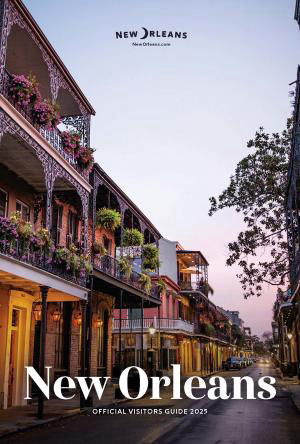
The iron-lace balconies, interior courtyards, and arched doorways that you will encounter throughout the Quarter date primarily from this Spanish rebuilding period. Landmarks constructed during Spanish rule include the Cabildo (site of the Louisiana Purchase transfer), the Presbytere, and the present St. Louis Cathedral. Despite 40 years of Spanish governance, New Orleans remained French at heart, with schools teaching in French, newspapers publishing in French, and residents looking to Paris for culture and fashion.
- Spanish administration (1762-1800) brought economic prosperity
- Fires of 1788 and 1794 destroyed most French colonial structures
- Spanish building codes created the iconic iron balconies and courtyards
- Cabildo, Presbytere, and St. Louis Cathedral constructed during this era
The Louisiana Purchase and American Growth (1803-1860)
On December 30, 1803, the Louisiana Purchase transferred New Orleans and 827,000 square miles of territory from France to the United States for $15 million. The ceremonies took place in the Cabildo on Jackson Square. At the time of the purchase, New Orleans had approximately 8,000 residents and exports approaching $2 million annually.
The arrival of Americans created cultural tensions with the established Creole population. Americans settled primarily in what is now the Central Business District, across Canal Street from the French Quarter, while Creoles maintained their stronghold in the Vieux Carre. This division gave Canal Street its name: it was planned as the site of a navigation canal (never built) separating the two communities. The decades before the Civil War represented New Orleans' golden age of commerce, as Mississippi River trade made it one of America's wealthiest cities. The Pontalba Buildings, completed in 1850 and facing Jackson Square, remain among the oldest apartment buildings in the United States.
- Louisiana Purchase (1803): $15 million for 827,000 square miles
- Louisiana achieved statehood in 1812
- Canal Street divided American and Creole communities
- Pre-Civil War era: New Orleans among America's wealthiest cities
- Pontalba Buildings (1850): oldest apartment buildings in the U.S.
The Birth of Jazz and Cultural Renaissance (1890s-1940s)
New Orleans gave the world jazz. The music emerged in the 1890s from the city's unique cultural mixing: African rhythms preserved through gatherings in Congo Square, Caribbean influences from the slave trade routes, Creole musical traditions blending European and African elements, blues from the Delta, and church music. Brass bands incorporated these styles and performed at civic events, parades, political rallies, and the music-filled funerals for which the city remains famous.
Louis Armstrong, born in New Orleans on August 4, 1901, transformed this local music into a global art form. Raised in a rough neighborhood known as "the Battlefield" near present-day Tulane Avenue and Broad Street, young Louis learned to play cornet at the Colored Waifs' Home and honed his skills in the smoky clubs of Black Storyville. By the time of his death in 1971, Armstrong had become one of the most influential musicians in history. In 2001, the city renamed its airport Louis Armstrong New Orleans International Airport in his honor.
- Jazz emerged in New Orleans in the 1890s from diverse cultural influences
- Louis Armstrong (1901-1971): New Orleans native, global jazz ambassador
- Preservation Hall (established 1961): maintains traditional jazz traditions
- Vieux Carre Commission (1936): protected French Quarter's architectural heritage
- French Quarter designated a National Historic Landmark
Resilience and Renaissance (2005-Present)
Hurricane Katrina struck on August 29, 2005, flooding 80% of the city when levees failed and displacing hundreds of thousands of residents. The French Quarter, built on higher ground near the river, escaped the worst flooding. The recovery revealed New Orleans' defining characteristic: resilience. Residents returned, rebuilt, and recommitted to the city's unique culture.
Today's New Orleans preserves three centuries of history while embracing growth and innovation. The city draws approximately 10 million visitors annually to the French Quarter's time-worn streets, where live music spills from clubs, galleries display local art, and restaurants serve cuisine found nowhere else on earth. Healthcare has emerged as a major economic driver, with Ochsner Health and other systems providing thousands of jobs and attracting patients from across the nation.
- Hurricane Katrina (2005): catastrophic flooding, remarkable recovery
- French Quarter survived on higher ground near the Mississippi
- Recovery attracted newcomers committed to the city's future
- 10 million annual visitors to the French Quarter
- Healthcare now a major economic and employment driver
New Orleans' history creates a sense of place unlike anywhere else in America. The city's French and Spanish colonial past, its role in the Louisiana Purchase, its gift of jazz to the world, and its recovery from natural disaster all contribute to a community identity grounded in cultural pride and resilience. As a physician practicing here, you become part of this living history, caring for families whose roots may stretch back generations in this remarkable city.