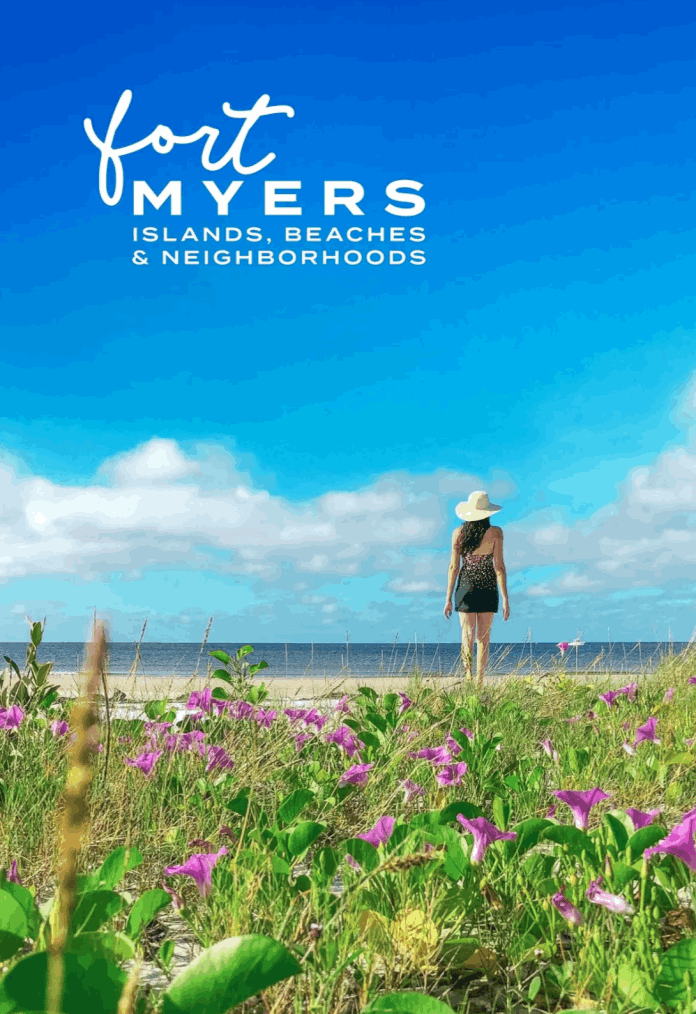
Flying into Southwest Florida International Airport, you will see the landscape unfold beneath you: the winding Caloosahatchee River cutting through green lowlands, barrier islands strung like pearls along the Gulf of Mexico coastline, and the distinctive pattern of canals that define neighboring Cape Coral. Fort Myers sits on the eastern bank of the Caloosahatchee, where the river widens before emptying into the Gulf approximately 15 miles downstream. The terrain is flat, as is typical of Florida, but the waterways and coastal features create visual interest that metropolitan sprawl cannot match.
Known as the "City of Palms", Fort Myers anchors the Cape Coral-Fort Myers metropolitan area, which has grown to over 834,000 residents as of 2023. The city serves as the county seat of Lee County and functions as the commercial and cultural hub for Southwest Florida. This region has experienced substantial population growth over the past decade, driven by retirees seeking warm weather, families drawn to the quality of life, and professionals attracted to Florida's tax advantages. The area continues to rebuild and expand following Hurricane Ian in 2022, with significant construction and development visible throughout the region.
Fort Myers earned recognition from USA Today as one of the "Top 10 Best Florida Beach Towns". The combination of accessible beaches, historic attractions, and modern amenities distinguishes it from both the congested metropolitan areas of South Florida and the quieter retirement communities farther north. This is a place where you can practice medicine at a major health system while living minutes from world-class beaches and nature preserves.
The barrier islands off Fort Myers' coast rank among the most beautiful destinations in the United States. Sanibel Island, located approximately three miles offshore and connected by a causeway, earned recognition from Frommer's Travel Guide as a top tourist destination. The island is renowned worldwide for its shelling; the east-west orientation acts as a natural sift for Gulf tides, depositing over 400 species of shells along its 15 miles of beaches. Locals and visitors practice the "Sanibel Stoop", bending to collect pastel-colored shells that wash ashore daily.
Captiva Island connects to Sanibel via a small bridge at Blind Pass and offers an even more secluded atmosphere. With a permanent population of just over 500 residents, Captiva preserves genuine island charm with white sand beaches, boutique shops along Andy Rosse Lane, and waterfront restaurants serving fresh Gulf seafood. The island has drawn artists, writers, and creative minds for decades; Anne Morrow Lindbergh wrote her classic "Gift from the Sea" on these shores.
Fort Myers Beach occupies Estero Island and provides a more energetic atmosphere with seven miles of white sand, beachfront restaurants, and the lively Times Square district near the fishing pier. Lovers Key State Park, accessible via bridge from Fort Myers Beach, offers a quieter natural setting with a tram service transporting visitors to pristine Gulf beaches through mangrove wetlands.
Fort Myers enjoys a tropical savanna climate with distinct wet and dry seasons. Winters are mild and sunny, with temperatures ranging from the mid-50s to mid-70s Fahrenheit from December through February. This dry season draws visitors and seasonal residents escaping northern winters. Summers bring heat and humidity, with daytime highs in the low 90s and afternoon thunderstorms that typically clear within an hour or two. The wet season runs from May through October, with August seeing the most rainfall.
The hurricane season officially runs from June through November, with the highest risk from August through October. Hurricane Ian struck the region in September 2022, causing significant damage to Fort Myers Beach and surrounding areas. The community has demonstrated remarkable resilience, with extensive rebuilding efforts restoring beaches, businesses, and infrastructure. This recovery has contributed to the region's growth as new residents and businesses invest in the area's future.
The climate supports year-round outdoor activity. You can golf, fish, kayak, or walk the beach in January when colleagues in northern cities are shoveling snow. The warm Gulf waters remain comfortable for swimming from April through December, and even winter temperatures allow water activities for those willing to brave slightly cooler conditions.
Southwest Florida International Airport (RSW) served over 11 million passengers in 2024, ranking among the top 50 U.S. airports for passenger traffic. The airport offers nonstop service to 75 destinations across the United States, Canada, and Europe through 16 airlines. You can fly direct to major hubs including Chicago O'Hare, Atlanta, Newark, Charlotte, and Detroit, with the most frequent service to Chicago averaging 65 weekly departures.
International service includes direct flights to Toronto, Montreal, and Frankfurt. The Frankfurt route, operated by Discover Airlines, represents the longest nonstop option at approximately 9 hours and 15 minutes. For Caribbean destinations or other international travel, connections through Atlanta or Miami provide easy access.
The airport sits just southeast of Fort Myers with direct access from Interstate 75 via Daniels Parkway. Most residents reach the terminal within 20-30 minutes, depending on their location in the metropolitan area. Ongoing expansion includes construction of a fourth concourse with 14 additional gates, scheduled for completion by 2027.
Fort Myers' connection to innovation runs deep. Thomas Edison built his winter estate, "Seminole Lodge", here in 1886, eventually establishing his botanical research laboratory on the property. His friend Henry Ford purchased the adjacent estate, "The Mangoes", and the two inventors spent winters collaborating and socializing in Fort Myers. Today, the Edison and Ford Winter Estates encompass 20 acres of historical buildings, gardens, and a museum drawing visitors from around the world.
This legacy of innovation continues at Lee Health, where the AI-powered fetal monitoring hub represents the kind of forward-thinking investment that attracted Edison to the region over a century ago. The healthcare system combines cutting-edge technology with genuine community connection, reflecting values that have defined Fort Myers since its founding.
The downtown Fort Myers River District has experienced revitalization, with trendy restaurants, art galleries, and entertainment venues lining the streets near Centennial Park along the Caloosahatchee River. The area hosts community events, farmers markets, and cultural celebrations throughout the year while preserving historic architecture and character.
Fort Myers offers the rare combination of established community character, ongoing growth and investment, and access to natural beauty that draws people to Florida. You will find a metropolitan area with the amenities physicians expect, beaches and outdoor recreation that rival any destination in the country, and a healthcare system positioned as a regional leader. This is a place where you can build both a career and a life.
Looking to explore a new destination, but not sure where to start? A travel guide can help you discover the hidden gems and must-see attractions of a new place. Whether you're looking for the best local cuisine, the most scenic views, or the most exciting activities, a good travel guide can provide you with insider knowledge and expert recommendations. With a travel guide in hand, you can make the most of your trip and experience a new place like a local. So why not start planning your next adventure with a travel guide today?
Long before European explorers arrived, the Calusa people dominated Southwest Florida. These skilled fishermen and traders built a sophisticated civilization along the Gulf Coast, constructing shell mound communities and developing extensive trade networks. Historians believe the Calusa capital may have been located near present-day Fort Myers, making this area significant to indigenous culture for centuries. By the 19th century, the Seminole people had replaced the Calusa in the region, establishing villages and cattle ranches across the Caloosahatchee River basin.
Spanish explorer Juan Ponce de León likely visited the area during his expeditions in 1513 and 1521. For the next two centuries, Southwest Florida saw only sparse habitation: Spanish fishermen establishing temporary camps, Caribbean pirates careening their ships in San Carlos Bay and Charlotte Harbor, and occasional pioneers testing the wilderness. British cartographers noted the area on 18th-century maps, but permanent settlement remained elusive in this remote corner of Florida.
When Florida became a U.S. Territory in 1821, conflict with the Seminole people became inevitable as settlers pushed into traditional hunting grounds. The Second Seminole War brought military operations to the Caloosahatchee River, where Fort Dulaney was established at Punta Rassa near the river's mouth. When a hurricane destroyed that installation in October 1841, the Army relocated upstream to a site they named Fort Harvie.
Renewed conflict in 1850 prompted extensive reconstruction. The post was renamed Fort Myers in honor of Colonel Abraham C. Myers, quartermaster for the Army's Department of Florida and future son-in-law of Major General David E. Twiggs, who commanded Fort Brooke in Tampa. At its peak, Fort Myers became one of the finest and largest installations of the Seminole Wars, featuring more than 50 buildings constructed of hardy yellow pine, a 1,000-foot wharf for ship docking, and a two-story blockhouse that appeared in Frank Leslie's Illustrated Newspaper. The cleared grounds roughly covered the area bounded by present-day Hough, Monroe, and Second Streets in downtown Fort Myers.
The Third Seminole War ended in 1858 when Chief Billy Bowlegs surrendered, and the Army abandoned the fort. During the Civil War, Union forces briefly reoccupied the installation, but military presence ended permanently when the war concluded.
Captain Manuel A. Gonzalez founded the civilian community of Fort Myers on February 21, 1866. A Spanish-born sailor who had delivered mail and supplies to Union forces during the wars, Gonzalez knew the area well. When the government abandoned the fort, he sailed from Key West and established the region's first trading post near the ruins. He traded tobacco, beads, and gunpowder with neighboring Seminoles, purchasing otter, bobcat, and alligator hides for resale.
A small community formed around the trading post. Settlers dismantled the abandoned fort for building materials; some of the first civilian structures in Fort Myers were constructed with timber from the military installation. The cattle industry drove early economic growth. After the Civil War, Florida beef found a ready market in Cuba. Ranchers herded cattle through Fort Myers to Punta Rassa, where an 800-foot wharf, cow pens, and a few saloons served the trade. Ships bound for Cuba paid one gold coin per cow, roughly $15 at the time.
The town was officially platted in 1876 and incorporated in 1885, becoming the seat of newly created Lee County in 1886. By that time, Fort Myers ranked among the largest towns on Florida's Gulf Coast and had begun attracting winter visitors escaping harsh northern climates.
The year 1885 brought Fort Myers its most famous resident when Thomas Alva Edison discovered the town during a visit. Seeking a healthier, warmer climate for his work, the inventor purchased a 13-acre riverfront site for $2,750 and built his winter estate, "Seminole Lodge". Construction was completed in 1886, and Edison returned each winter for decades, conducting botanical experiments and hosting distinguished guests at his laboratory.
Edison loved Fort Myers so much that he convinced his close friend Henry Ford to become his neighbor. In 1916, Ford purchased the adjacent property and built "The Mangoes" as his winter retreat. The two inventors spent winters together, often joined by Harvey Firestone and John Burroughs. Their presence elevated Fort Myers from a remote cattle town to a destination associated with innovation and American industry.
Edison contributed directly to the city's development. He proposed electrifying the town and conducted experiments on local flora, including extensive bamboo research for use in light bulb filaments. The famous royal palm trees lining McGregor Boulevard were planted during this era, earning Fort Myers its enduring nickname: "City of Palms".
Today, the Edison and Ford Winter Estates encompass 20 acres of historical buildings, botanical gardens, and museums. The 1928 Edison Botanical Research Laboratory and the 15,000-square-foot Edison Ford Museum draw visitors from around the world, connecting modern Fort Myers to its legacy of innovation.
The arrival of the Atlantic Coast Line Railroad on May 10, 1904, transformed Fort Myers. Improved access brought tourists, settlers, and investment. The city paved streets, developed residential neighborhoods including Edgewood, Wardwood Grove, and Dean Park, and constructed the Bradford Hotel to accommodate visitors. Mediterranean Revival architecture, which typifies Florida during the 1920s, defined commercial and residential construction throughout the city.
The 1920s brought "Boom Time" to all of Florida, and Fort Myers shared in the prosperity. Elaborate homes and commercial buildings rose throughout the city. But the boom collapsed when hurricanes, poor publicity, and inadequate planning combined with the onset of the Great Depression to halt development across the state. Fort Myers suffered along with the rest of Florida, though some elegant buildings were completed during the lean years, including the Federal Building in 1933 and the Edison Bridge, which improved travel connections to the north.
The Works Progress Administration contributed to Fort Myers' infrastructure, including the Yacht Basin originally designed for Sarasota. Mayor Dave Shapard traveled to Washington and successfully transferred the project to Fort Myers, where construction began in 1936.
World War II brought renewed growth as military personnel trained in the area. In the decades following the war, development spread east and west along the Caloosahatchee River and south along Cleveland Avenue. The city was known as "Cowtown" until the 1960s and 1970s, when northern retirees and families discovered its temperate climate, natural amenities, and affordable land.
Cape Coral, connected to Fort Myers by two bridges, emerged as a planned community in the late 1950s and grew to become the largest city between Tampa and Miami on the Gulf Coast. Lehigh Acres developed from 18,000 acres acquired by Lee Ratner in 1954. Southwest Florida International Airport opened in 1983, replacing the constrained Page Field and providing modern commercial air service that accelerated regional growth.
Hurricane Ian struck Southwest Florida on September 28, 2022, causing catastrophic damage to Fort Myers Beach, Sanibel Island, and surrounding communities. The storm tested the region's resilience, but recovery efforts have been remarkable. Beaches have reopened, businesses have rebuilt, and the community has demonstrated the determination that has defined Fort Myers since its founding. The area continues to grow, with new construction visible throughout the region and population projections remaining strong.
Fort Myers has evolved from a military outpost to a cattle town, from a winter retreat for inventors to a modern metropolitan area, while preserving the historic districts, architectural heritage, and community character that connect residents to the past. Walking through downtown Fort Myers today, you pass buildings that witnessed Edison's experiments and Ford's visits, streets shaded by palms planted over a century ago, and a riverfront park where the original fort once stood.
The Cape Coral-Fort Myers metropolitan area has grown to over 834,000 residents as of 2023, making it one of the fastest-growing regions in Florida and the nation. The city of Fort Myers itself has approximately 100,000 residents, with the population increasing 16.7% since the 2020 census. This growth reflects the region's appeal to retirees seeking warm weather, families drawn to the quality of life, young professionals attracted to career opportunities, and snowbirds who maintain seasonal residences.
You will serve a patient population that spans generations and backgrounds. The median age in Fort Myers is 40.3 years, younger than many assume for a Florida community. While 22.2% of residents are 65 or older, substantial populations exist in the working-age brackets: 27.9% are between 25 and 44, and 21.9% are between 45 and 64. Approximately 17% are children under 15. This age distribution creates demand for the full spectrum of OB/GYN services, from prenatal care and deliveries through menopause management and gynecologic surgery.
The region continues to attract new residents at a pace that strains existing healthcare capacity. Hurricane Ian's aftermath initially displaced some residents, but recovery has driven population rebound and new construction throughout Lee County. Physicians practicing here find established patient panels and genuine need for services, particularly in obstetrics as young families relocate to the area.
Fort Myers reflects Florida's multicultural character. The racial composition includes 53.2% White, 22.2% Black or African American, 2.1% Asian, and 16.3% identifying as two or more races. Hispanic residents of any race comprise approximately 24% of the population, contributing to a community where Spanish is commonly heard alongside English. About 71% of residents speak only English at home, while roughly 20% speak Spanish.
This diversity enriches community life and creates meaningful connections for physicians who value serving varied patient populations. International festivals, Latin cultural celebrations, and community events throughout the year reflect the area's multicultural fabric. The Dunbar-Jupiter Hammon Public Library houses the largest African American book collection in Southwest Florida, honoring the first African American poet to have his work published.
Your patients will represent this community's full diversity. Families who trace their roots to Cuba, Puerto Rico, Mexico, and Central America live alongside those whose families have called Southwest Florida home for generations. Retirees from the Northeast and Midwest bring their own cultural traditions and healthcare expectations. This variety keeps clinical practice interesting and allows physicians to build relationships across demographic lines that would be impossible in more homogeneous communities.
The Fort Myers economy has diversified beyond its tourism roots while maintaining the hospitality sector as a significant employer. Healthcare represents the largest employment category at 14.9% of the workforce, reflecting the region's aging population and growing medical infrastructure. Lee Health alone employs more than 17,000 people, making it the largest employer in Lee County and one of the largest public health systems in Florida.
Retail trade employs 14.8% of workers, followed by hospitality at 11.3% and construction at 9.2%. The construction sector remains strong due to ongoing population growth and post-hurricane rebuilding. Education employs 7.9% of residents. Unlike purely seasonal resort communities, Fort Myers maintains year-round economic activity through its healthcare, education, and corporate sectors.
Several corporate headquarters call Fort Myers home. Chico's FAS, the women's clothing retailer operating Chico's, White House Black Market, and Soma brands, maintains its corporate campus here with over 1,100 employees. Gartner, the global research and advisory firm, employs 1,200 people in the Gateway area. GenesisCare US (formerly 21st Century Oncology) bases its U.S. operations in Fort Myers. Millennium Physician Group, one of Florida's largest physician groups with over 500 providers, is headquartered locally. Florida Cancer Specialists & Research Institute, the nation's largest independent oncology/hematology practice, maintains corporate offices and multiple facilities in Lee County.
The concentration of corporate headquarters and healthcare organizations creates professional opportunities for physician spouses beyond what most communities this size can offer. Marketing, finance, human resources, and technology positions exist at Chico's, Gartner, and the various healthcare organizations headquartered in the region. The Lee County School District employs nearly 11,000 people, offering teaching and administrative positions. Florida Gulf Coast University and Florida SouthWestern State College provide academic employment options.
The entrepreneurial environment supports small business development, and Florida's business-friendly tax structure attracts professionals who want to launch their own ventures. Real estate, consulting, and professional services firms thrive in the growing economy. Spouses seeking remote work opportunities benefit from reliable internet infrastructure and a time zone that allows collaboration with both East Coast and West Coast employers.
The Edison Festival of Light represents the signature community celebration, a three-week February festival honoring Thomas Edison's legacy. The Grand Parade of Light, recognized as the largest night parade in the Southeast, draws spectators from across the region for a two-hour procession of floats, marching bands, and entertainers through downtown Fort Myers. The festival includes car shows, craft fairs, a 5K race, science education events for children, and the Mutt Strut dog parade. Residents mark their parade viewing spots weeks in advance, and the celebration brings together the entire Southwest Florida community.
Throughout the year, Fort Myers hosts events that reflect its diverse population. ArtFest Fort Myers showcases regional and national artists each February. The Fort Myers Beach Shrimp Festival in March celebrates the Gulf's seafood bounty. Greek Fest brings Mediterranean culture to the community. The Taste of the Islands on Sanibel highlights local restaurants. Monthly Art Walks in the downtown River District feature galleries, live demonstrations, and street performances on the first Friday of each month.
The Southwest Florida community supports these gatherings enthusiastically. Unlike anonymous metropolitan areas where neighbors rarely know each other, Fort Myers retains the character of a place where people connect at local events, recognize each other at restaurants, and build genuine relationships over time. Physicians who relocate here frequently comment on the welcoming nature of residents and the ease of establishing social connections.
Southwest Florida attracts people who have chosen this lifestyle deliberately. Retirees relocated here because they wanted proximity to beaches, outdoor activities, and warm weather. Families moved for quality of life and career opportunities. Transplants from the Northeast, Midwest, and other Florida regions bring diverse perspectives while sharing an appreciation for what makes this area special.
Residents tend toward friendliness and openness. The slower pace compared to Miami or Tampa allows for conversations with neighbors, unhurried interactions at local businesses, and genuine community connections. At the same time, the region's growth brings energy and ambition that prevents the stagnation sometimes found in purely retirement communities.
You will find patients who appreciate their physicians, engage in their healthcare decisions, and follow up on recommendations. The community values relationships with providers and often expresses gratitude for quality care. Physicians who invest in getting to know their patients build practices marked by loyalty and word-of-mouth referrals that sustain careers over decades.