Community Overview

Exploring Our Community

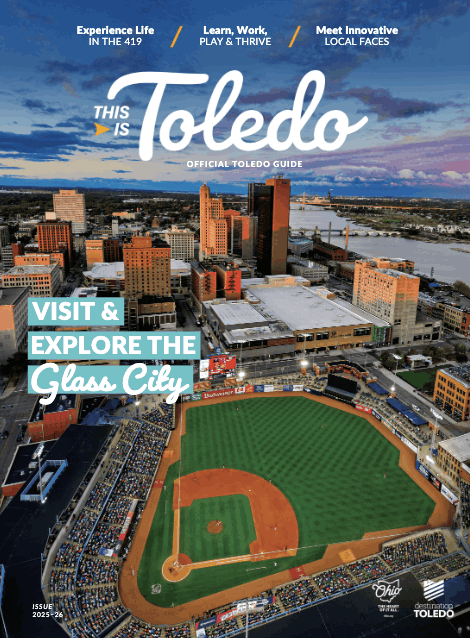
The Glass City on Lake Erie

When your plane descends toward Toledo, you'll see a city positioned at the intersection of geography and opportunity. The Maumee River cuts through downtown before emptying into Lake Erie's western basin, creating a natural harbor that has shaped this community for generations. To the west, you'll spot the outline of Michigan just across the state line. To the east, farmland stretches toward Cleveland, 115 miles away. This is northwest Ohio, a region where Midwestern values meet Great Lakes industry, where four-season living comes without the cost penalties of coastal markets.

Toledo anchors a metropolitan area of approximately 600,000 residents, serving as the healthcare, cultural, and economic center for a much larger region that extends into southeastern Michigan. The city earned national recognition when U.S. News & World Report consistently ranks it among the most affordable places to live in America. Money Magazine has highlighted Toledo for its combination of low housing costs and strong job market. What draws people here goes beyond affordability. You'll find a community that preserved its architectural heritage while building modern infrastructure, maintained its manufacturing base while diversifying into healthcare and education, and created cultural amenities that rival cities three times its size.

  • The metropolitan area serves over 600,000 residents across Lucas County and surrounding communities
  • Toledo Express Airport offers direct flights to major hubs including Atlanta, Orlando, Tampa, Charlotte, and Las Vegas
  • Detroit Metropolitan Airport sits just 45 minutes north, providing access to hundreds of domestic and international destinations
  • Downtown Toledo features a revitalized waterfront district with the Hensville entertainment area and Promenade Park
  • The region experiences all four seasons with approximately 178 days of sunshine annually
  • Lake Erie provides 60 miles of accessible shoreline within the greater Toledo area
  • Major employers include ProMedica Health System, Mercy Health, University of Toledo, Owens Corning, and Dana Incorporated

Regional Character and Recognition

Toledo occupies a unique position in the American Midwest. You're close enough to Detroit (60 minutes), Cleveland (115 minutes), and Columbus (140 minutes) to access big-city amenities, yet far enough away to avoid their traffic, costs, and congestion. The city's "Glass City" nickname reflects its history as the glass manufacturing capital of the world. Libbey Glass, Owens-Illinois, and Pilkington built empires here, and that legacy continues through the world-class Toledo Museum of Art with its Glass Pavilion.

The community attracts families seeking quality schools at reasonable costs, young professionals drawn by affordable homeownership, and retirees who want accessibility to healthcare and culture without sacrificing their retirement savings. Unlike the anonymous experience of practicing in larger metropolitan areas, Toledo offers a city large enough to provide big-city resources but small enough that you'll recognize colleagues at the grocery store and build genuine community connections.

  • Toledo ranks among the top 20 most affordable mid-size cities in America
  • The city has invested over $300 million in downtown revitalization since 2015
  • Glass manufacturing heritage continues through specialty glass and advanced materials production
  • Regional healthcare systems employ over 25,000 people, creating a robust medical community
  • Lake Erie's western basin provides exceptional walleye and bass fishing, drawing anglers from across the Midwest
  • Cedar Point amusement park in Sandusky sits just 60 miles east, providing world-class entertainment
  • Put-in-Bay and Kelleys Island in Lake Erie offer summer weekend getaways accessible by ferry
  • The city serves as a regional hub for specialty medical care across northwest Ohio and southeast Michigan

Why Physicians Choose Toledo

When you ask physicians why they chose Toledo, you hear consistent themes. They mention buying their first home within months of arriving, something that would have taken years in the markets where they trained. They talk about 20-minute commutes instead of hour-plus slogs through traffic. They describe taking their children to the Toledo Zoo on weekends, attending Toledo Symphony concerts, or walking through the Toledo Museum of Art without fighting crowds or paying admission.

The medical community here offers something increasingly rare in American healthcare: colleagues who became friends, practice environments where you can focus on medicine rather than administrative burdens, and compensation packages where your income translates into genuine financial security rather than just keeping pace with living costs. You'll find a city that appreciates its physicians, where your expertise matters and your presence in the community makes a difference.

Toledo offers what many physicians seek but struggle to find—a place where you can practice excellent medicine, raise a family comfortably, build real wealth, and still have time and energy left for the parts of life that matter beyond the hospital walls.

Your Ultimate Travel Guide

Looking to explore a new destination, but not sure where to start? A travel guide can help you discover the hidden gems and must-see attractions of a new place. Whether you're looking for the best local cuisine, the most scenic views, or the most exciting activities, a good travel guide can provide you with insider knowledge and expert recommendations. With a travel guide in hand, you can make the most of your trip and experience a new place like a local. So why not start planning your next adventure with a travel guide today?

History Unveiled: A Journey Through Time

From Frontier Outpost to Industrial Powerhouse

Toledo's story begins at the convergence of the Maumee River and Lake Erie, a strategic location that Native American tribes recognized for centuries before European settlement. The area served as a crucial portage route between the Great Lakes and the Mississippi River watershed. When American forces built Fort Industry here in 1794, they established what would become one of the most important commercial centers in the Northwest Territory.

The city's founding in 1833 came after one of America's more unusual conflicts. The Toledo War of 1835-1836 pitted Ohio against Michigan over a narrow strip of land containing the mouth of the Maumee River. Ohio wanted the commercial advantages of controlling this natural harbor, while Michigan Territory claimed the land based on its northern boundary interpretation. President Andrew Jackson intervened, awarding the Toledo Strip to Ohio while compensating Michigan with the Upper Peninsula. Ohio got the better deal at the time, securing access to what would become a major shipping port, though Michigan's copper and iron deposits eventually proved valuable too.

  • Toledo was officially incorporated as a city in 1837
  • The city's name honors Toledo, Spain, suggested by merchant Willard J. Daniels
  • Early growth centered on shipping grain and timber through the Great Lakes
  • The Wabash and Erie Canal, completed to Toledo in 1843, connected the city to the Ohio River
  • By 1850, Toledo had become a major railroad hub, earning the nickname "Future Great City of the World"
  • The city served as a key stop on the Underground Railroad before and during the Civil War

The Glass City Emerges

Toledo's transformation into the Glass City began in 1888 when Edward Drummond Libbey moved his New England Glass Company from Massachusetts to Toledo. Libbey recognized that Toledo offered something his competitors lacked: abundant natural gas for fuel, sand deposits suitable for glassmaking, and transportation networks to ship finished products nationwide. His decision sparked a revolution in American glass manufacturing.

Michael Owens, a Libbey employee, invented the automatic bottle-making machine in 1903 while working in Toledo. This innovation transformed glass from a luxury product into an everyday material. Within two decades, Toledo produced more than half of the glass made in America. Libbey Glass, Owens-Illinois, Owens Corning Fiberglas, and dozens of specialty glass companies created an ecosystem of expertise that still influences the city today.

  • Edward Drummond Libbey founded the Toledo Museum of Art in 1901, giving the city a world-class cultural institution
  • Owens-Illinois became the world's largest glass container manufacturer
  • Owens Corning pioneered fiberglass insulation and building materials
  • Libbey Glass supplied glassware to the White House and luxury hotels worldwide
  • The glass industry employed over 25,000 workers in Toledo by the 1920s
  • Toledo glassworkers developed techniques that became industry standards globally

Industrial Diversification and Modern Toledo

While glass built Toledo's reputation, the city diversified throughout the 20th century. Willys-Overland built automobiles here from 1909 to 1955, at one point becoming the second-largest auto manufacturer in America. The Jeep was born in Toledo during World War II, and Chrysler continued Jeep production here for decades. Dana Corporation, Champion Spark Plug, and automotive parts suppliers created a manufacturing base that employed tens of thousands.

The city weathered the industrial challenges of the 1970s and 1980s better than many Rust Belt communities. While manufacturing employment declined, Toledo successfully transitioned toward healthcare, education, and advanced materials. ProMedica Health System and Mercy Health expanded to become major regional employers. The University of Toledo grew into a research institution. Solar panel manufacturing, advanced glass production, and automotive innovation replaced some of the lost factory jobs.

  • The University of Toledo was founded in 1872 as a private institution, becoming public in 1967
  • Medical College of Ohio merged with the University of Toledo in 2006, creating a major academic health center
  • ProMedica Health System, founded in 1986, grew to become one of Ohio's largest healthcare organizations
  • Downtown Toledo underwent major revitalization starting in the 2000s, with over $300 million invested in new development
  • The Port of Toledo remains one of the busiest Great Lakes ports, handling millions of tons of cargo annually
  • Toledo Express Airport opened in 1955, providing commercial air service to the region

Heritage That Shapes Daily Life

When you walk through Toledo today, you encounter this history at every turn. The Toledo Museum of Art, Libbey's gift to the city, offers free admission and houses one of the finest glass collections anywhere. The Glass Pavilion, opened in 2006, showcases the artistry and innovation that defined the city's industrial heritage. Historic neighborhoods like the Old West End preserve Victorian mansions built by glass barons and industrialists.

The values that shaped Toledo remain visible in the community. The work ethic of manufacturing generations translated into healthcare professionals who take pride in their craft. The philanthropic tradition established by industrial leaders continues through community foundations and cultural institutions. The geographic position that made Toledo a commercial hub now makes it a regional medical center serving patients across northwest Ohio and southeast Michigan.

Toledo's history created a community that values practical innovation over empty prestige, that built world-class institutions through private philanthropy rather than government mandate, and that weathered economic transitions without losing its essential character. You'll practice medicine in a city shaped by people who built industries, created jobs, and gave back to their community—values that persist in Toledo's medical institutions today.

Population & Demographics: Understanding Our Diverse Community

A Stable, Diverse Community

The Toledo Metropolitan Statistical Area encompasses approximately 600,000 residents across Lucas, Wood, Fulton, and Ottawa counties. The city of Toledo proper holds about 270,000 people, with suburban communities like Perrysburg, Sylvania, Maumee, and Oregon providing additional residential options. Unlike the transient populations of boom-and-bust markets, Toledo maintains remarkable stability. Families put down roots here. Your neighbors will likely be the same people five years from now, creating the kind of community continuity that feels increasingly rare in American life.

You'll serve a population that reflects the Midwest's demographic shifts over the past century. The community includes established families whose grandparents worked in the glass factories, younger professionals attracted by affordable homeownership, and growing immigrant communities that add cultural richness. Toledo's affordability attracts young families from higher-cost markets like Chicago, Detroit, and Columbus. Retirees stay because their fixed incomes stretch further here than in Sun Belt destinations, and they want proximity to family and quality healthcare.

  • Metropolitan population of approximately 600,000 across the four-county area
  • City of Toledo population around 270,000
  • Median age of 38 years, slightly older than the national average
  • Population has remained stable over the past decade after declining in the 1980s and 1990s
  • The metro area includes significant suburban growth in communities like Perrysburg and Sylvania
  • Approximately 70% white, 22% Black or African American, 8% Hispanic or Latino, 2% Asian
  • Over 40 languages spoken in Toledo Public Schools, reflecting growing diversity

Cultural Richness and Community Character

Toledo's cultural diversity creates experiences you might not expect in a Midwestern city of this size. The annual Black Swamp Arts Festival draws over 150,000 visitors each September, transforming downtown into an outdoor gallery with over 150 artists. The Toledo Polish Festival celebrates the city's strong Eastern European heritage with traditional music, dancing, and food. The Islamic Center of Greater Toledo serves a growing Muslim community, while Hindu and Buddhist temples serve Asian residents.

You'll encounter this diversity in your practice. The refugee resettlement programs bring families from Bhutan, Myanmar, and African nations, creating both clinical challenges and cultural learning opportunities. The Hispanic community, concentrated in neighborhoods like Lagrange Street, maintains strong cultural traditions while contributing to the city's economic growth. The Lebanese and Syrian communities, dating back generations, run many of the city's successful small businesses.

  • Median household income approximately $45,000 for the city, $60,000 for the metro area
  • Major employers include healthcare (ProMedica, Mercy Health), education (University of Toledo, Bowling Green State University), manufacturing (Dana, Libbey), and government
  • Unemployment typically tracks below the national average
  • The region has seen growth in solar manufacturing, advanced materials, and logistics
  • Over 30% of adults hold bachelor's degrees or higher
  • Strong skilled trades presence with union training programs

Professional Opportunities for Spouses

Your spouse will find genuine career opportunities here. ProMedica Health System employs over 18,000 people across the region, with positions ranging from healthcare administration to information technology to research. Mercy Health offers similar employment breadth. The University of Toledo employs over 7,000 faculty and staff. Corporate headquarters for Dana Incorporated, Owens Corning, and other major companies provide executive and professional positions.

The legal community supports a federal courthouse and active state courts. Engineering firms serve the manufacturing and construction sectors. Marketing agencies, accounting firms, and consulting practices offer professional services opportunities. Toledo's lower cost of living means your spouse can be selective about positions rather than forced to take the first job offer to cover expenses.

  • Major healthcare employers ProMedica (18,000+ employees), Mercy Health (8,000+ employees)
  • University of Toledo employs over 7,000 faculty and staff
  • Bowling Green State University employs over 2,000 people
  • Corporate headquarters provide executive and professional opportunities
  • Strong legal community with federal and state court presence
  • Thriving nonprofit sector with organizations like United Way, Toledo Community Foundation, and specialty service agencies
  • Remote work opportunities increasingly common, with Toledo's low cost of living making it attractive for professionals working for out-of-state companies

Community Values and Temperament

Toledoans value straightforward communication over pretense. This is a community that appreciates competence and dedication more than credentials and pedigree. You'll find neighbors who help shovel each other's driveways in winter, who organize block parties in summer, and who actually know each other's names. The anonymity of large metropolitan areas doesn't exist here. People remember when you do good work, when you volunteer at the food bank, when you coach your kid's soccer team.

The community supports its institutions and cultural life. Toledo Museum of Art attendance exceeds 400,000 annually despite free admission. The Toledo Symphony, Toledo Opera, and Valentine Theatre maintain strong subscription bases. High school football games draw thousands of fans on Friday nights. This isn't a community where people retreat into private bubbles. They engage with their city's cultural and civic life.

As a physician, you'll find a community that respects medical expertise without expecting you to be available 24/7. Patients understand that you have a life beyond the hospital. They appreciate when you remember their families, when you explain treatment options clearly, and when you treat them with respect. You won't encounter the entitled attitudes common in wealthy enclaves or the mistrust prevalent in underserved urban areas. Instead, you'll build the kind of physician-patient relationships that make medicine satisfying.

Toledo offers the authentic community connection that drew many physicians to medicine in the first place. You'll practice in a place where your work matters to real people who become neighbors and friends, not just chart numbers in an anonymous metropolitan healthcare system.
© Copyright 2023 Pacific Companies. All Rights Reserved.