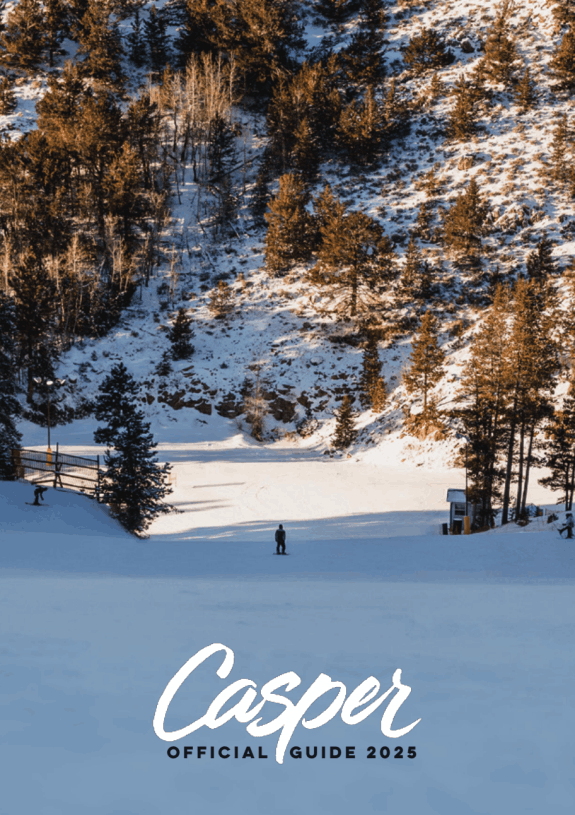
Casper sits at 5,150 feet in the high plains of central Wyoming, flanked by Casper Mountain to the south and the North Platte River running through its core. The landscape is wide open — long sight lines, big sky, and a quietness that physicians moving from congested metro areas notice immediately. The city serves as the commercial and medical hub of central and eastern Wyoming, drawing patients from a geographic area larger than many New England states.
Flying in, you see the contrast: rugged mountain terrain giving way to rolling plains, the river threading through town, and a modest but functional small city grid below. There are no traffic jams on your commute.
Casper is Wyoming's second-largest city and functions as the state's economic center for energy, agriculture, and healthcare. It isn't a resort town or a pass-through stop — it's a working city with deep roots and a population that tends to stay.
Wyoming's seasons are genuine. Winters bring cold temperatures and occasional heavy snow, though Casper sits in a banana belt relative to much of Wyoming — the wind can be sharp, but snowfall is moderate. Spring arrives with wildflower blooms along the mountain trails. Summers are warm, dry, and almost entirely humidity-free, with temperatures typically in the 70s and 80s. Fall brings golden light across the plains and the mountains.
Wind is a real factor in Casper. The city ranks among the windiest in the country, which is part of why it's also one of the sunniest — storms move through fast.
Physicians who choose Casper typically cite three things: cost of living, outdoor access, and quality of life without the trade-offs of a large metro. Wyoming has no state income tax, housing is significantly cheaper than comparable metros, and you can park at a trailhead without a reservation. The sense of space — physical and professional — is something residents consistently mention.
Casper is a place where people know their neighbors, wait times for local services are short, and the pace outside the hospital is genuinely different from what most physicians experience in academic medical centers or large urban systems.
Looking to explore a new destination, but not sure where to start? A travel guide can help you discover the hidden gems and must-see attractions of a new place. Whether you're looking for the best local cuisine, the most scenic views, or the most exciting activities, a good travel guide can provide you with insider knowledge and expert recommendations. With a travel guide in hand, you can make the most of your trip and experience a new place like a local. So why not start planning your next adventure with a travel guide today?
Casper's story begins at a river crossing. The North Platte River was one of the most significant obstacles on the Oregon, California, and Mormon trails, and the site that would become Casper was where tens of thousands of westward migrants crossed between the 1840s and 1860s. The military established a small post here in 1862, later named Fort Caspar in honor of Lt. Caspar Collins, a young officer killed in a skirmish with Arapaho warriors in 1865. The city's name is a variant spelling of his.
When the Fremont, Elkhorn and Missouri Valley Railroad extended its line into the area in 1888, a town platted itself around the terminus almost overnight. Casper was incorporated in 1889, the same year Wyoming achieved territorial status. It grew quickly as a supply and service center for the surrounding ranching and agricultural economy.
Everything changed in 1889 when oil was discovered at the Salt Creek Oil Field north of town. Casper became one of the first major oil boomtowns in the American West, and by the 1910s and 1920s it was home to refineries, oil company offices, and a rapidly expanding population. The Midwest Refinery, later acquired by Standard Oil and eventually Amoco, operated here for decades.
The mid-20th century brought diversification. Casper's role as a regional service hub expanded beyond energy to include healthcare, retail, and government services. Wyoming Medical Center, the state's largest hospital, grew into a major regional referral facility. Casper College was established in 1945 to serve returning veterans and became a cornerstone of the community's educational identity.
The oil busts of the 1980s were difficult, but Casper proved more durable than other single-industry towns. The healthcare and service sectors absorbed much of the economic shock, and the city emerged with a more balanced economic base.
Today Casper functions as Wyoming's commercial and medical capital in all but official designation (Cheyenne holds the state capital title). The city has invested in its riverfront, trail systems, and downtown core over the past two decades. Fort Caspar Museum is an active heritage site with a reconstructed fort. The National Historic Trails Interpretive Center draws visitors from across the country and keeps the city's frontier identity anchored in something real rather than manufactured.
Physicians joining the Casper medical community become part of a place with genuine history — not a suburb built in the last twenty years, but a city with a defined sense of who it is and how it got there.
Casper is Wyoming's second-largest city, with a population of approximately 58,000 within city limits and roughly 80,000 in Natrona County. The broader regional draw for healthcare, retail, and services extends well beyond that — Wyoming Medical Center and other Casper-based providers serve a catchment area of 200,000 or more across central and eastern Wyoming.
Growth has been steady but not explosive, which keeps housing prices in check and preserves the community's character. Casper doesn't feel like a city in flux; it feels established.
| Geography | Population (est.) |
|---|---|
| City of Casper | ~58,000 |
| Natrona County | ~80,000 |
| Healthcare service area | ~200,000+ |
The population is predominantly white (approximately 84%), with Hispanic/Latino residents comprising about 10% and smaller communities of Native American, Asian, and Black residents. The community is relatively young — the median age is around 35 — partly a reflection of the energy sector's workforce and the presence of Casper College.
Energy has historically driven Casper's economy, and the oil and gas sector remains central. Healthcare has become an equally significant employer, with Wyoming Medical Center as the largest single employer in the region. Retail, education, and government round out the employment base.
Casper's economy offers reasonable professional opportunities, particularly in healthcare, education, engineering, and business services. The University of Wyoming maintains an extended campus here, and Casper College employs a sizeable faculty. The regional healthcare system creates ongoing demand for allied health professionals, administrators, and support staff. For spouses seeking remote work, Casper's internet infrastructure supports it, and Wyoming's lack of state income tax applies to all household income.
Casper residents tend to be independent, direct, and self-reliant. The Wyoming ethos runs through the city: people manage their own affairs, hold doors open, and don't spend much time on formality. Neighbors know each other. Physicians often describe the patient population as grateful, practical, and trusting — less litigious and more relationship-oriented than what many experience in urban markets.
The community is not highly international or multilingual by metro standards, but the Hispanic community adds cultural depth, and Casper College draws students from across the region and occasionally abroad. Spanish is the most commonly spoken non-English language.
Physicians who want to be known in their community — rather than one provider among thousands — find Casper naturally accommodating to that.