Community Overview

Exploring Our Community

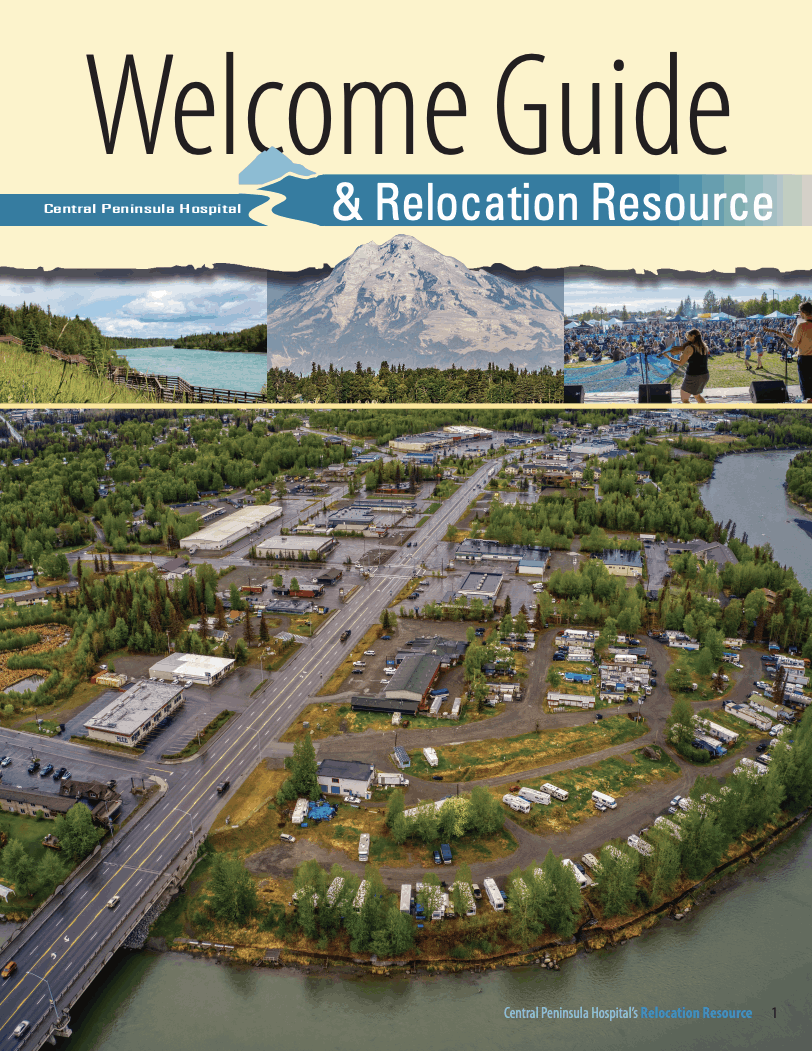
Soldotna sits on the banks of the Kenai River in Southcentral Alaska, roughly 150 miles south of Anchorage on the Kenai Peninsula. The city serves as the seat of the Kenai Peninsula Borough and functions as the commercial and government hub for the entire Central Peninsula. Its location at the junction of the Sterling Highway and Kenai Spur Highway gives residents easy access to both the vast wilderness on their doorstep and the larger services that a regional center provides.

The landscape surrounding Soldotna is the defining feature of daily life here. The glacier-fed Kenai River runs directly through town, and the western boundary of the nearly 2-million-acre Kenai National Wildlife Refuge begins at the city's edge. Residents live alongside moose, bears, eagles, and some of the most productive salmon runs in the world.

Regional Setting

Feature Details
Region Southcentral Alaska, Kenai Peninsula
Population (city) ~4,500
Population (Kenai Peninsula Borough) ~60,000
Nearest Major City Anchorage, AK (150 miles north)
Drive to Anchorage Approximately 2.5 to 3 hours
Nearest Airport Kenai Municipal Airport (ENA), 10 miles west
Elevation 213 feet above sea level
Climate Subarctic with moderate winters for the latitude

Climate

Soldotna has a dry-summer subarctic climate. Winters are long and snowy but notably mild compared to other communities at the same latitude, thanks to the moderating effect of Cook Inlet and the surrounding terrain. Summers bring extended daylight, with nearly 19 hours of sun during the solstice.

Month Avg High (°F) Avg Low (°F)
January 18 6
February 22 9
March 32 17
April 44 28
May 56 38
June 65 48
July 68 51
August 65 49
September 54 40
October 37 26
November 22 12
December 16 7

Annual snowfall averages around 52 inches. The northern lights are visible regularly during the winter months.

Community Snapshot

Category Detail
City Type Home rule city, borough seat
Setting Riverfront community in boreal forest
Nearest Major Airport Kenai Municipal (ENA), 10 miles
International Access Ted Stevens Anchorage International (ANC), ~3 hours
Key Employers Central Peninsula Hospital, Kenai Peninsula Borough, retail and service sectors
Adjacent Wilderness Kenai National Wildlife Refuge (1.9 million acres)

What Sets Soldotna Apart

Soldotna offers something genuinely rare: a functioning small city with full services embedded in world-class wilderness. Residents walk to the Kenai River to fish for king salmon, ski groomed trails minutes from their front door, and live in a community with a hospital, college, and regional retail within a short drive. The pace is deliberate, the outdoor access is exceptional, and the community has a strong identity rooted in its homesteading past and its relationship with the land.
Your Ultimate Travel Guide

Looking to explore a new destination, but not sure where to start? A travel guide can help you discover the hidden gems and must-see attractions of a new place. Whether you're looking for the best local cuisine, the most scenic views, or the most exciting activities, a good travel guide can provide you with insider knowledge and expert recommendations. With a travel guide in hand, you can make the most of your trip and experience a new place like a local. So why not start planning your next adventure with a travel guide today?

History Unveiled: A Journey Through Time

The land that became Soldotna has been inhabited for thousands of years. The Dena'ina Athabascan people, who called the Kenai Peninsula "Yaghanen" (the good land), used the Kenai River corridor for salmon fishing, hunting, and seasonal camps long before any outside contact. The name "Soldotna" is derived from the Dena'ina term ts'eldatnu, meaning "trickling down creek," a reference to Soldotna Creek's flow into the Kenai River.

Key Historical Milestones

  • Prehistoric era: Dena'ina Athabascan peoples occupy the Kenai River corridor for subsistence fishing and hunting
  • Late 1700s: Russian fur traders establish contact with coastal Dena'ina communities near present-day Kenai; the Holy Assumption of Saint Mary Russian Orthodox Church is established in Kenai in 1791
  • 1941: The federal government establishes the Kenai National Moose Range (later renamed the Kenai National Wildlife Refuge), protecting the region's wildlife
  • 1947: Following World War II, the U.S. government opens land near the lower Kenai River to settlement under the Homestead Act; World War II veterans receive a 90-day filing preference; the Sterling Highway right-of-way is cleared from Cooper Landing to Kenai, and the present site of Soldotna is chosen for the river bridge crossing
  • 1949: The Soldotna Post Office opens; the log cabin that housed it is now listed on the National Register of Historic Places
  • 1957: Oil is discovered at Swanson River, roughly 30 miles north of Soldotna, triggering major economic development across the Kenai Peninsula; the city's first movie theater opens
  • 1960: Soldotna officially incorporates as a fourth-class city with 332 residents
  • 1964: Kenai Peninsula College, the Kenai Peninsula Borough government, and the Kenai Peninsula Borough School District are all established
  • 1967: Soldotna is reclassified as a first-class city
  • 1985: Local angler Les Anderson pulls a 97.2-pound king salmon from the Kenai River, setting the world record that still stands today; the fish is on display at the Soldotna Visitor Center
  • 1990s to present: Soldotna grows into the commercial, healthcare, and government hub of the Central Peninsula

The Homesteading Legacy

Homesteading is central to Soldotna's identity. Because WWII veterans independently claimed and developed their own parcels, the city never formed around a traditional downtown grid. Businesses grew where homesteaders happened to sell land, creating the spread-out commercial layout that still characterizes the city today. The Soldotna Homestead Museum, a collection of original log structures in Centennial Park, preserves this history. Cabins were relocated to the site and are open for visitors each summer, offering a tangible connection to the people who cleared the land and built the community.

The homesteading era is not just local lore. It shapes how residents relate to independence, self-reliance, and the land. That sensibility carries through to the present.

Population & Demographics: Understanding Our Diverse Community

Soldotna is a small but steadily growing community. As the seat of the Kenai Peninsula Borough, the city draws residents employed in healthcare, government, retail, and the trades from across the surrounding region. The population is younger than state and national averages, reflecting an active, working-age community with families spread across the wider peninsula.

Population Overview

Metric Soldotna U.S. Average
City Population (2024 est.) ~4,500 N/A
Kenai Peninsula Borough ~60,000 N/A
Median Age 33 38
Population Growth (2020–2024) Gradual increase Varies
Homeownership Rate ~58% ~66%
Average Commute Time 12.7 minutes 27.6 minutes

Age Distribution

Age Group Share of Population
Under 15 21.4%
Ages 15–24 12.4%
Ages 25–44 27.8%
Ages 45–64 18.9%
65 and older 19.5%

The population skews toward working-age adults and families with children, reflecting the city's role as a regional employment and services center.

Racial and Ethnic Composition

  • White (non-Hispanic): ~78%
  • Two or more races: ~10%
  • American Indian / Alaska Native: ~6%
  • Hispanic or Latino: ~4%
  • Asian: ~2%
  • Other: ~1%

Economic and Educational Profile

The primary employment sectors in Soldotna are healthcare and social assistance, retail trade, and accommodation and food services. Healthcare is the single largest employer, which reflects both the regional hospital's footprint and the broader medical services ecosystem serving the Central Peninsula.

Metric Detail
Median Household Income ~$56,000–$63,000
Poverty Rate ~16%
High School Diploma or Higher 95%
Bachelor's Degree or Higher ~21%
Largest Employer Sector Healthcare and Social Assistance

Soldotna's workforce includes a notable contingent of military veterans, consistent with the city's homesteading roots and its history as a destination for veterans seeking land and independence.

© Copyright 2023 Pacific Companies. All Rights Reserved.